Cart
0
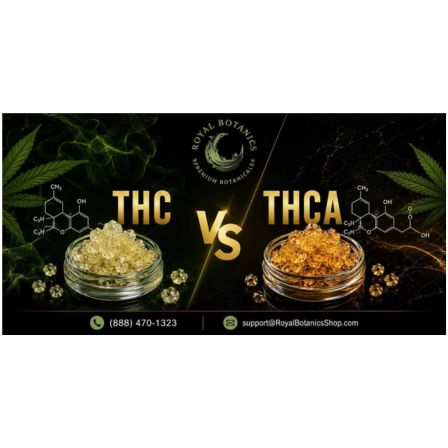
Quick Overview: This blog explains THC vs THCA in a simple way, focusing on how both compounds come from the same plant but behave differently. It covers THCA in its raw form, THC formed through heat, and why their structure matters. The guide also explains why they are often compared in bulk supply chains and how processing changes their chemical state.
When people first hear about cannabis compounds, THC and THCA often get mixed up. The names look almost identical, and both come from the same plant. But once you understand them, you’ll see they behave very differently.
If you’ve ever wondered what’s the difference between THC and THCA, the answer goes beyond labeling. It comes down to chemical structure, heat exposure, and how each compound exists in the plant.
In most discussions around the difference between THC and THCA, people focus on effects first. But it helps to start with the basics before going further.
What THCA Actually is?
THCA stands for tetrahydrocannabinolic acid. It is the natural form found in raw cannabis plants before any heating or processing.
In its original state, THCA is non-psychoactive. This simply means it stays in an inactive form until it is exposed to heat or light.
When THCA is heated, it goes through a process called decarboxylation. During this process, it slowly converts into THC. This chemical change is what separates the two compounds in behavior, even though they come from the same source.
How THC is Formed?
THC is not present in large amounts in raw plants. Instead, it is created when THCA is exposed to heat through smoking, vaporizing, or other processing methods.
This change is simple but important:
● THCA = raw form
● Heat applied = chemical change
● THC = converted active compound
This is why THC is often seen as the “activated” version of THCA.
What’s the Difference Between THC and THCA?
To clearly understand what’s the difference between THC and THCA, it helps to compare them side by side:
|
Feature |
THCA |
THC |
|
Natural state |
Found in raw plant material |
Formed after heating |
|
Formation |
Present in a fresh, unheated plant |
Created through decarboxylation |
|
Chemical structure |
Has an extra carboxyl group |
Loses that group after conversion |
|
Type of compound |
Acidic, inactive form |
Activated form |
|
Role |
Starting compound |
Converted end compound |
Even though they are closely related, this small structural difference changes how they behave. That’s why they are discussed together but never treated as the same compound.
Why the Conversion Matters?
The conversion from THCA to THC is an important part of cannabis chemistry. Without heat, THCA stays in its natural form. With heat, it changes into THC. This means the same plant material can behave differently depending on how it is processed.
This is also why storage, handling, and processing conditions matter in large-scale supply chains.
Where Bulk Products Fit in?
In commercial supply chains, cannabinoid materials are often handled in bulk for better consistency and process control. You will often see bulk THCA products for sale in structured listings used as raw input materials.
In these setups, THCA is kept in its stable form before any conversion takes place. This helps maintain control over when and how changes happen during processing, instead of them occurring unintentionally during storage or transport.
Key Factors in Bulk Purchasing Decisions
When placing bulk orders, buyers usually focus on a few important points:
- Minimum order quantities and flexibility
- Pricing structure across volume levels
- Batch-to-batch consistency
- Clear product grading and documentation
- Stability during storage and transport
- Packaging quality for safe handling
- Clear specifications for planning
- Reliable batch information for repeat orders
These factors help reduce uncertainty and make large-scale ordering smoother and more predictable.
Check Bulk Options Today!
THC and THCA are closely connected but not the same. THCA is the natural starting compound found in raw plants, while THC is the converted form created through heat. Understanding the difference between THC and THCA makes it much easier to see how a simple change in processing can shift the structure and behavior of a compound.
In real-world supply chains, especially at scale, clarity and consistency matter just as much as the material itself. That’s where Royal Botanics fits in. It offers structured bulk listings with clear specifications, batch consistency, and easy-to-read product details—so buyers can compare options confidently and choose what fits their workflow without confusion.
FAQs
1. Why is THCA used in bulk supply chains?
THCA is used in bulk supply chains because it is stable in raw form, allowing controlled handling and predictable processing before any conversion takes place.
2. Does THCA automatically turn into THC?
No, THCA only converts into THC when exposed to heat. Without heating, it remains in its original raw and non-converted form.
3. Is THCA a raw version of THC?
Yes, THCA is considered the raw precursor of THC. It naturally exists in the plant before heat converts it into the active form.
4. What’s the difference between THC and THCA?
The difference between THC and THCA is that THCA is the raw form found in plants, while THC is created when THCA is exposed to heat.
5. What are bulk THCA products for sale used for?
Bulk THCA products are commonly used as raw input materials in structured supply chains where consistency, handling control, and processing accuracy are important.